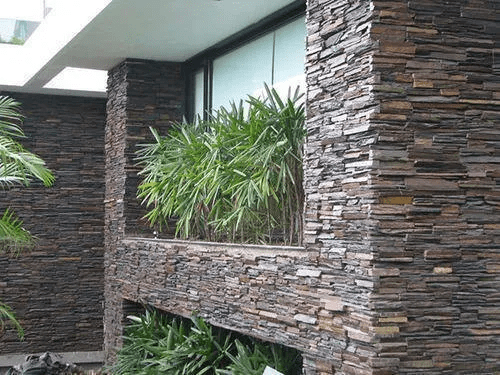
Most older houses have layered walls. Paint over plaster, sometimes tiles over that, and now and then wallpaper hiding under all of it. Stripping every layer back sounds fine until you’re standing in a cloud of dust on day two. The good news is you often don’t need to. You can fix natural stone wall cladding tiles to many existing surfaces, as long as the surface underneath is solid. Everything else in this article is really just a way of checking that one thing.
Can natural stone wall cladding tiles go over old plaster?
In most cases, yes. Plaster serves as an excellent substrate for natural stone tiles, provided it is securely attached to the wall, and it has dried properly. The first step in the process involves conducting the knock test. Knock on the wall and listen to the sound produced. If the noise produced is hollow, it indicates that the plaster is loose from the bricks beneath and needs to be cut out and replaced. Other indications include noticing if there are any wet patches or any white crystallization stains. Ultimately, moisture will win and pull the tiles off the wall no matter what the bonding agent is. If the plaster is intact, use a brush to clean it, and then apply the bonding primer.
What about painted walls?
Paint catches people out more than anything else we see. Matt emulsion in decent shape is fine after a good scuff with sandpaper. Gloss is a different story, because adhesive can’t grip that shiny skin. Sand it hard or strip it. If paint is peeling anywhere at all, scrape until you reach something firm. Yes, it’s boring. But stone is heavy, and a weak paint layer will come away from the wall with your new cladding still stuck to it. I’ve seen it happen, and it’s not a nice thing to watch.
Fixing natural stone wall cladding tiles over old ceramic
If the old tile wall is flat, solid, and free from cracks, it can serve as a good base for the natural stone wall cladding. You will want to test each tile's stability by pressing it down. If it does not remain still, you should remove it. Since glazed tiles are smooth, they will need to be roughened with a grinder or with the help of a suitable bonding agent. You will also have to consider the weight. People tend to forget the issue of the wall load. Make sure that the weight of heavy ceramic combined with the stone tiles is within the limits of the wall. The thicker pieces must also be mechanically secured. And ensure that the deep grout lines are filled, too; otherwise, they would be visible after the surface has been finished.
Preparation is the boring bit that decides everything
The majority of the flaws we witness in natural stone wall cladding tiles occur due to improper preparation rather than poor quality stones. Cleaning grease, soot and dirt is essential. Fill in any gaps, smooth out bumps and allow the repairs to dry completely. Use an appropriate primer along with a flexible cement-based glue suitable for stones. Butter heavy pieces so air does not accumulate behind them. Locate a level line and begin by placing the first piece at the bottom of the wall. Finally, seal the wall. The kitchens, restrooms and exteriors will surely benefit from your work in the future.
Choosing natural stone wall cladding tiles for an existing wall
It is the weight of materials that is a critical factor. Lightweight materials do not contribute much to the weight of the building and are great for refurbishments, while heavier stones need special walls to be installed. While the choice of stones like slate, quartzite and sandstone for cladding is huge, their appearance may change significantly when installed. Rough stones are much more forgiving towards imperfections of existing walls compared to shiny surfaces. When used outdoors or in wet conditions, the material has to be able to withstand moisture and frost. It is important to always compare different types of stones in terms of weight per square meter and method of installation. When selecting the materials, pay attention to the samples of stone as well to see how well they look in daylight.
Why choose The Stone Evolution
We’d honestly rather tell you a wall isn’t ready than sell you a stone that drops off in a year. Send photos of your plaster, paint or tiles to The Stone Evolution and we’ll suggest a suitable thickness, adhesive and fixing method. Our range of natural stone wall cladding tiles covers indoor and outdoor jobs, and you can order samples before spending real money. We’ll also help you work out quantities, so you aren’t left with a pile of offcuts or, worse, running short halfway through.
Sort the wall first, then enjoy the stone
So, can you clad over old plaster, paint or tiles? Yes, if the surface is sound, clean and strong enough to carry the weight. Plaster is usually the easiest. Paint needs sanding or stripping. Tiles need a bonding agent and a quick think about load. Put the effort into the wall and the stone mostly takes care of itself. Not sure about yours? Send us a few photos and we’ll tell you what we think, even if the answer is “not yet”.