
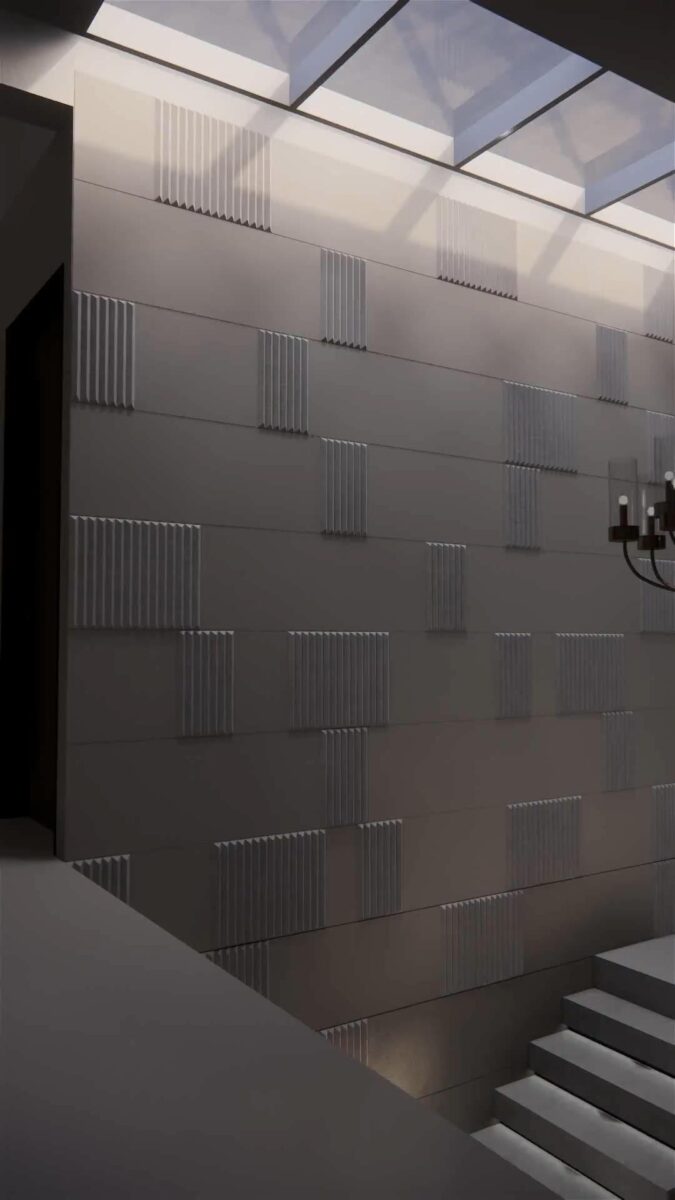
Here's the thing nobody tells you when you spec a composite panel system: it looks great in the render, decent at handover, and then somewhere around year four it starts giving you away. Faded patches. A slightly warped edge near the parapet. That's usually the moment someone on the design team says "let's just use stone this time." When a hotel finally commits to natural stone wall cladding tiles instead it's rarely because a mood board told them to. It's because a composite job went sideways somewhere else in the portfolio, and nobody wanted a repeat.
What Natural Stone Wall Cladding Tiles Actually Solve
Harsh climates have a way of damaging coastal resorts. Salt air, shining sun, and long rainy seasons in parts of the country cause composite panels to deteriorate much more quickly than anticipated. However, stone is more than a match for nature’s punishment. Granite, quartzite, and sandstone are all weather-resistant and have existed on earth for millions of years before builders started harvesting them for hotel exteriors. So when a resort developer chooses to go with stone at a coastal or high-altitude venue, it is not merely a question of aesthetics. It is a matter of allowing the facility to forget its façade for the next thirty years.
The Part Guests Actually Notice
Guests touch everything. A hand along the reception counter, a shoulder against the pool cabana wall, that half-second of noticing the texture while waiting on a valet. Composite panels feel like what they are: smooth, hollow if you knock on them, a bit off. Stone has weight. It has grain that shifts as you move past it. Nobody can explain why a lobby feels expensive, but a lot of the time it comes down to exactly this.
Sustainability Stopped Being a Buzzword
Composite panels are mostly petroleum-based, and once they come off a building, there's not much you can do with them. Stone gets quarried, cut, and years later, during a renovation, can often be pulled up and reused instead of dumped one more reason architects now specify natural stone wall cladding tiles when sustainability actually matters on paper, not just in the pitch deck. More resort groups are asking their architects about lifecycle footprint now, not just finish samples. Hard to argue with a material that was already sitting in the ground before the hotel was ever drawn on paper.
Design Options Nobody Expects From Stone
There's a strange assumption floating around that stone limits you creatively compared to engineered panels. It doesn't, and honestly it's the opposite. Honed finishes, split-face textures, and the sheer range of tones across different quarries give architects more to play with than most composite catalogs offer, which tend to recycle the same six patterns across every hotel that uses them. A property in Rajasthan and one in Goa can both build with sandstone and still not resemble each other at all.
How The Stone Evolution Fits Into This
We work with architects and contractors before a single tile gets cut: material selection, quantity planning, finish matching- the unglamorous stuff that actually determines whether a project runs smoothly. At The Stone Evolution, we've had clients whose real question wasn't "what's the upfront cost" but "will this still look right in fifteen years?" That's the question stone answers better than anything manufactured, and it's honestly the conversation we enjoy having most.
The Real Math Behind This Shift
Run the numbers past a five-year mark and composite panels stop looking like the smart choice. They win on day-one price and lose slowly after that: repainting, replacement, the occasional warranty argument over UV fading nobody wants to have. Stone costs more going in and then, quietly, costs you almost nothing for a very long time, which is why so many developers now choose natural stone wall cladding tiles over anything engineered once the true lifetime cost sinks in. For a hotel where the building itself is basically part of the brand, that's not really a difficult call to make.
