
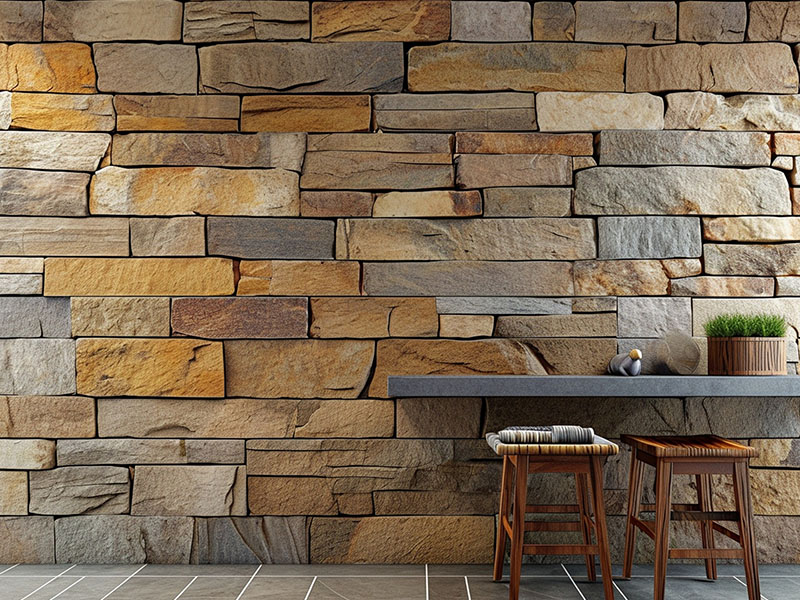
Pairing Stone Panels With Wood and Metal for Office and Co-Working Spaces
If you enter any office built in the last ten years, you are likely to find the same formula applied in all of them: drywall, the accent wall in a bright color and perhaps a few plants near reception. This may work but does not contribute much. More and more design teams are using interior stone wall panels now since texture creates an effect that posh paint cannot. As soon as you walk into a textured room, it already looks good to you without the need to take a seat. The challenge is getting this stone combined with wood and metal so that it looks like one choice made rather than three separate showrooms attached.
Why Interior Stone Wall Panels Work So Well in Shared Workspaces
Co-working spaces have an interesting challenge. They're supposed to create a warm environment that can accommodate several businesses at once. The key to solving this issue is that while stone has a neutral taste, it is still quite dominant. It is a method that doesn't impose its style on the ones using the space. When blackened steel is paired with a stone wall and some warm timber shelving, the space starts feeling less like a rental and more like the right place to arrange a conference call.
Wood Brings the Warmth Stone Can't Manage Alone
The feeling of rough stone is unpleasant when left by itself, mainly when fluorescent lighting is used. This problem can be solved by wood immediately. A white oak reception desk near your reclaimed stone wall will add warmth to your photographs, which are important when you need to show your office in the careers section of your website. Wood should be chosen within the warmer spectrum: for example, walnut and oak. Anything that is too gray or orange will only contrast with the natural stone.
Metal Adds the Edge That Keeps It From Feeling Rustic
Skip the metal and a stone-and-wood pairing can drift toward mountain lodge fast. Blackened steel brackets, brass hardware, and exposed beams next to interior stone wall panels pull the whole look back toward "modern office" without losing the warmth wood gives you. This is usually where people go wrong on their own. Too much wood and stone together starts to feel like a cabin, not a workplace. A little metal, used carefully, is often what separates the two.
Choosing the Right Stone Panel for High-Traffic Office Areas
Some finishes do not belong in a space that sees two hundred visitors every day. Lightweight engineered stone wall panels have better resistance to wear and tear than natural stone, and are cheaper to install. In places where noise is not an issue breakout rooms, lounges, and other areas with fairly low foot traffic natural stone may be an option.
Where to Use the Combination for the Most Impact
Some finishes do not belong in a space that sees two hundred visitors every day. Lightweight engineered stone wall panels have better resistance to wear and tear than natural stone, and are cheaper to install. In places where noise is not an issue breakout rooms, lounges, and other areas with fairly low foot traffic natural stone may be an option.
Why Businesses Choose The Stone Evolution
People ask why they'd pick us over a general contractor for something like this. Honestly, it comes down to specialization. The Stone Evolution only works with stone, wood, and metal finishes for commercial interiors, so we've seen what fails panels installed without accounting for HVAC vibration, wood tones chosen without ever seeing them under the office's real lighting, metal accents that oxidize faster than anyone expected. We spec around those problems before they happen instead of fixing them after the fact. Clients tend to come back because we handle the whole job sourcing, installation, and a walkthrough afterward to check everything's holding up.
Getting the Balance Right Without Overdoing It
Offices that get this wrong usually make one mistake: they pick stone, wood, and metal because they each liked one of them individually, not because the three worked together. Before committing to a wall, look at samples side by side under the room's actual lighting, not a supplier's showroom lights. A slight mismatch in undertone is a small thing to notice on a sample board and an expensive thing to notice after installation.